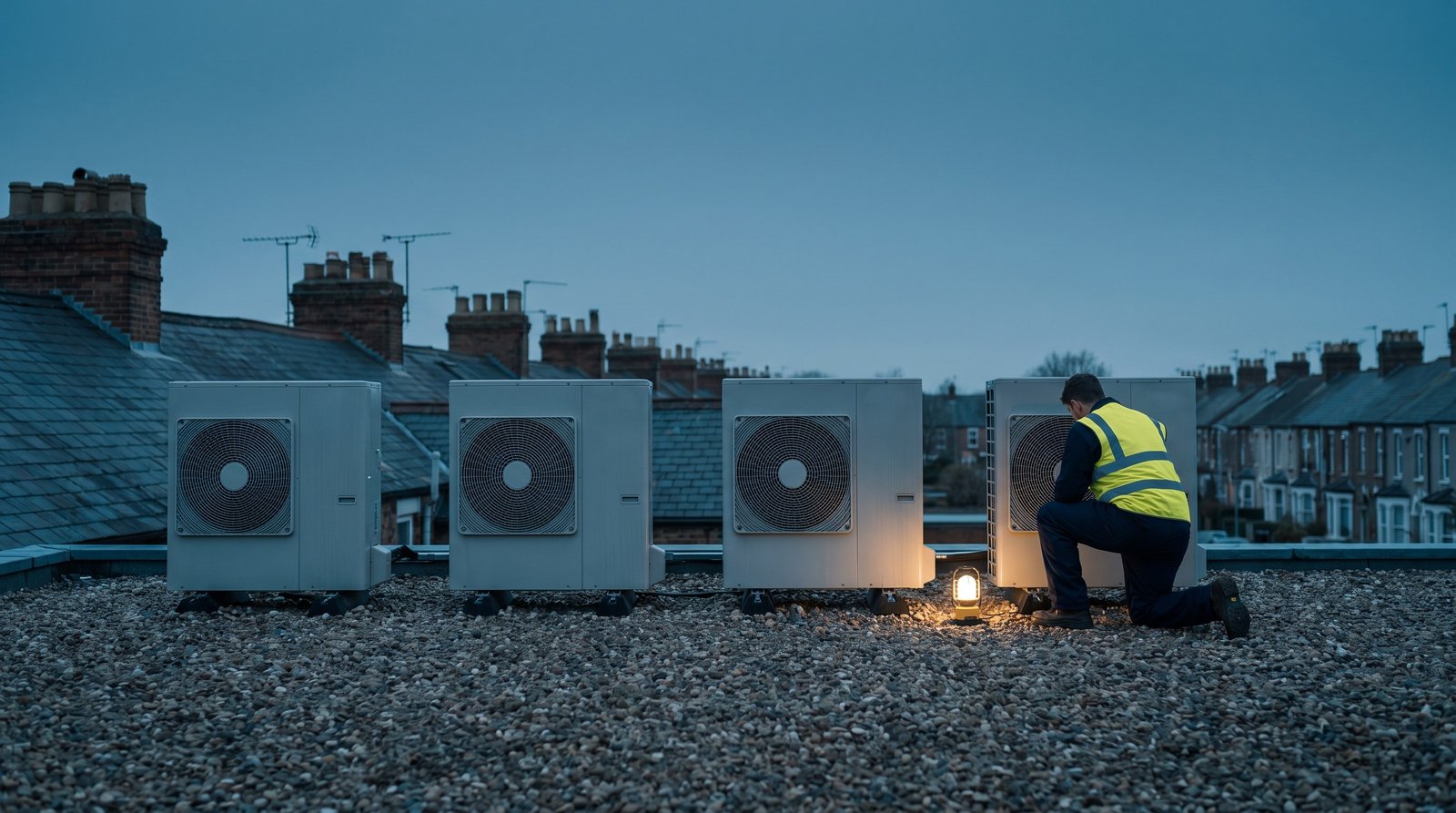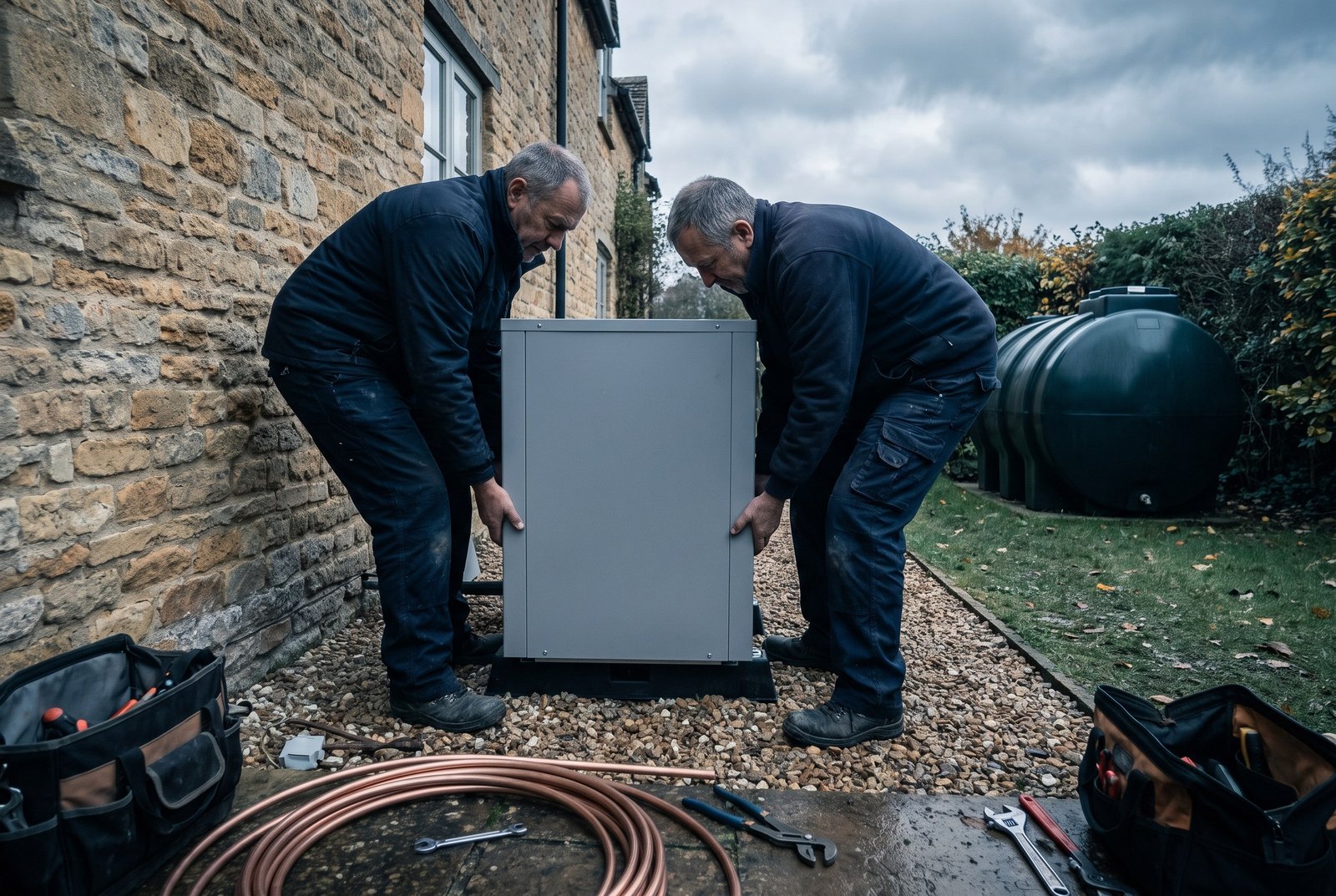
On 26 June 2026 the government announced the largest uplift to the Boiler Upgrade Scheme since it launched: the grant for replacing oil heating with a heat pump rises from £7,500 to £9,000, effective from 21 July. If you run an HVAC business, that announcement is worth more than a passing glance, because policy like this feeds directly into what your business is worth.
This post looks at what changed, why it matters beyond the oil-heated homes it targets, and how a buyer weighing up your business reads news like this. It expands on one of the four forces in our Autumn 2026 market briefing.
What Actually Changed
Three things moved in the first half of 2026. From 28 April, the scheme's grant categories were rebuilt: air-to-water heat pumps kept their £7,500 grant, ground source stayed at £7,500, biomass remained at £5,000 under the rural rules, and a new £2,500 category arrived for air-to-air heat pumps. Then in June came the headline change: £9,000 for households replacing oil heating, aimed at rural properties off the gas grid in England and Wales.
Around the grants sits the wider Warm Homes Plan. The package includes up to £1.7 billion in low and zero interest consumer loans for home energy upgrades, covering heat pumps alongside solar and batteries. Permitted development rights in England were also amended, so more households can now install an air source heat pump without a planning application. Each measure removes a reason for a homeowner to say "not yet".
Why This Matters Even If You Never Touch Oil Conversions
It is tempting to file the £9,000 grant under "good for rural installers, irrelevant to me". That would be a misreading. Buyers of HVAC businesses are not buying your current order book; they are buying a position in a sector, and they price that position on the strength of sector-wide demand. Every time the government hardens its commitment to electrified heating, the investment case behind every HVAC acquisition in the country gets a little stronger.
There is also a longer tail. Every heat pump installed under these schemes becomes a service and maintenance obligation for the next fifteen years. The grant money being spent in 2026 is creating the contract book revenue of the 2030s, and recurring service income is precisely what buyers pay premium multiples for.
The Demand Backdrop
The grants are working against a market that is already moving. MCS announced in February 2026 that the UK passed 250,000 certified heat pump installations, with 2025 the strongest year on record and the Boiler Upgrade Scheme funding 43 per cent of that year's installs. On the manufacturer side, the Clean Heat Market Mechanism's second year requires heat pumps to reach 8 per cent of relevant boiler sales, up from 6 per cent. Demand is being pulled by grants and pushed by regulation at the same time.
What To Do With This If You Are Thinking About Selling
First, if you already have MCS accreditation and trained heat pump engineers, make sure that capability is visible and documented, because it is one of the strongest cards in your hand. Second, if you are maintenance-led, look at how much of your contract base could take on heat pump servicing; the capability story matters as much as the current numbers. Third, understand that policy windows are exactly that. The current alignment of grants, loans and regulation is unusually favourable, and it is one of the reasons buyer appetite for HVAC businesses is strong right now.
From what we see across the market, businesses that can show a credible route into heat pump work consistently attract more buyer interest than those positioned as gas-only. You do not need to be a renewables specialist to benefit; you need a team and a plan a buyer can believe in.